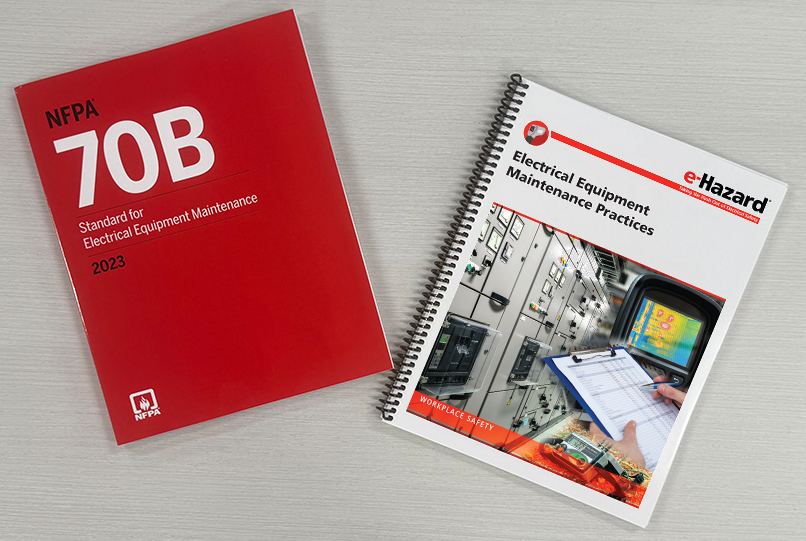
“Recommended” is Now Required
Let’s be honest. Most of you in the maintenance world have your hands full – putting out fires (sometimes literally), keeping production moving, and trying to stay ahead of breakdowns. So, when someone brings up the NFPA® 70B® 2023 update, it’s easy to brush it off with, “We’ve got a maintenance program already.”
But here’s the thing: NFPA 70B is no longer just a recommended document. It’s now a full-blown standard. That means what used to be recommended is now required. And it has a lot to say about what needs to go into your written Electrical Maintenance Program (EMP).
If you’re a maintenance manager, electrician, or facility professional, this shift affects you directly. Let’s unpack what this entails in plain terms.
First Things First: A Written EMP Is Required
Per Section 4.2.1, every equipment owner is now required to implement and document an overall EMP that matches the safety and operational risks of their facility. This isn’t just a checklist or a binder collecting dust—it’s a living document that reflects your real-world equipment, people, and processes.
Inspections Drive Maintenance Decisions
Section 4.2.2 lays out a simple idea that often gets missed: your EMP must include routine inspections to verify your electrical equipment is installed and maintained according to applicable codes and standards.
But here’s the key part – Section 4.2.2.2 says that the maintenance tasks you schedule should be based on the results of those inspections. That means what you find should directly influence what you do next. No more “set it and forget it” maintenance schedules.
Condition Matters—Not Just Age or Hours
Section 4.2.3 introduces a concept we all intuitively know: just because a piece of equipment is old doesn’t mean it’s in bad shape. Conversely, something relatively new can be worn out or unsafe depending on how it’s used or where it lives.
That’s why your EMP needs to factor in the current condition of your electrical equipment and not be based solely on time-based schedules. Environmental factors, load, wear, criticality, and failure history all matter here.
The 9 Core Elements You Can’t Skip
In Section 4.2.4.2, NFPA 70B lists out nine essential elements that your EMP must include. These aren’t merely suggestions; they’re the foundation of how the standard directs us to build the EMP. Here’s what needs to be part of your program:
- An electrical safety program that considers the condition of maintenance.
- Identification of personnel responsible for each element.
- A survey and analysis of your electrical systems to determine maintenance priorities.
- Documented equipment-specific maintenance procedures.
- A plan for inspections, servicing, and testing.
- A records policy covering equipment, tasks, and personnel.
- A process to prescribe and document corrective actions taken.
- A system for designing maintainability into new and existing installations.
- A program review process to update the EMP based on findings and failures.
If your current EMP lacks some of these, it might be time for a closer look.
Measuring and Improving the Program
Sections 4.2.5–4.2.7 emphasize a theme that runs through the whole standard: your EMP shouldn’t be static. You need the following:
- Controls to measure and monitor progress.
- A method to review reports from incidents, malfunctions, faults, overloads, and nuisance trips.
- An audit at least every five years to ensure the EMP is still aligned with the current edition of NFPA 70B.
Think of it as preventive maintenance for your maintenance plan. Without feedback and some TLC, it likely won’t get better—and could fall out of compliance.
People Matter – a Lot
Section 4.3 shifts focus to the folks on the ground. It’s not enough just to have a solid plan; you need the right people executing it.
- You need a designated EMP coordinator.
- Every person performing maintenance tasks must be qualified, which includes training, skills, PPE knowledge, and understanding of hazards.
- All training must be documented (Section 4.3.3.4), and employees need refresher training in cases like role changes, new equipment, or updated standards.
- If someone is learning on the job, they must be under the direct supervision of a qualified person.
Bottom line? The standard puts a lot of responsibility on the employer to make sure people are knowledgeable, trained, and supported by management.
Planning Based on Risk, Not Routine
Sections 4.4 and 4.5 go deeper into how you build your inspection and maintenance plan. Equipment evaluations will inform the scope and frequency of maintenance tasks. It should be based on the following:
- Potential safety risk to personnel or the equipment criticality factor.
- Manufacturer’s recommendations.
- Environmental and operational load conditions.
- Previous maintenance and equipment failure history.
- Downtime costs, operational impact, and production schedules.
This isn’t just a maintenance calendar. It’s a risk-based maintenance strategy.
Don’t Overlook Repairs, Retrofits, and Refurbished Equipment
Finally, Section 4.7 covers equipment that’s been rebuilt, repaired, or refurbished. The standard requires that…
- Safety certifications are maintained.
- Refurbished equipment is clearly marked.
- Qualified people perform the work to repair equipment.
- No changes are made that would compromise safety.
It’s easy to forget that retrofitting a panel or replacing parts can affect compliance. But the standard says it counts, and your EMP needs to address it.
So, What is Next?
NFPA 70B (2023) brings electrical maintenance into the spotlight—and not just because the 70B committee had nothing better to do. It’s about keeping people safe, keeping operations reliable, and crafting building systems that can stand the test of time.
If your current EMP doesn’t address these requirements, or if it hasn’t been touched in years, now’s a great time to step back and assess. Because today, it’s not just about doing maintenance. It’s about doing the right maintenance, the right way, with the right people.
And NFPA 70B is no longer making suggestions – it’s setting the rules.

Is E-Hazard offering a TTT for NFPA 70B?
At this time, we do not.
Thank you for your question! We welcome you to come back to e-Hazard’s website and training schedule for updated information.
I also do a lot of training on the importance of NEC 70/NFPA 70B/OSHA 70E and how they all tie together to eliminate loop holes. One problem we’re seeing is that the actual electrical, fire and OSHA inspectors are not up to date and aware of the changes. Do you have any feedback on how we get the actual inspectors updated and educated? This lack of knowledge is ignorance of the changes, but does not make the facility owners, engineers and maintenance companies less liable!
That is an excellent point! Typically, electrical inspectors cover only the installation of the equipment, OSHA inspectors cover only OSHA requirements (which do not cover maintenance yet), and fire inspectors cover fire and life safety issues. While you and I would likely say that maintenance is connected to all three of these, it is very often looked at as just something you can do to keep the building up and running and many who are not in the know don’t understand how important maintenance is to all of it. One type of inspector that I have noticed as being friendly to our cause is the insurance inspector, which is listed in Article 90 as a potential AHJ. In my opinion, this is just the start. It is going to take folks like us to keep pounding the pavement trying to get the word out not just about how to comply with NFPA 70B, but why this is so important. This is the reason why I am kicking off this monthly 70B blog that focuses primarily on the safety aspect and why I also jump at any chance I can to get up and talk about NFPA 70B. I share your sense of urgency here, but I also have a little bit of caution too. If the flood gates on NFPA 70B opened up tomorrow, would the industry be able to meet the demand? Give it time and keep doing everything we can to spread the message that NFPA 70B is the missing link that completes the electrical safety cycle.
Thanks for reaching out!